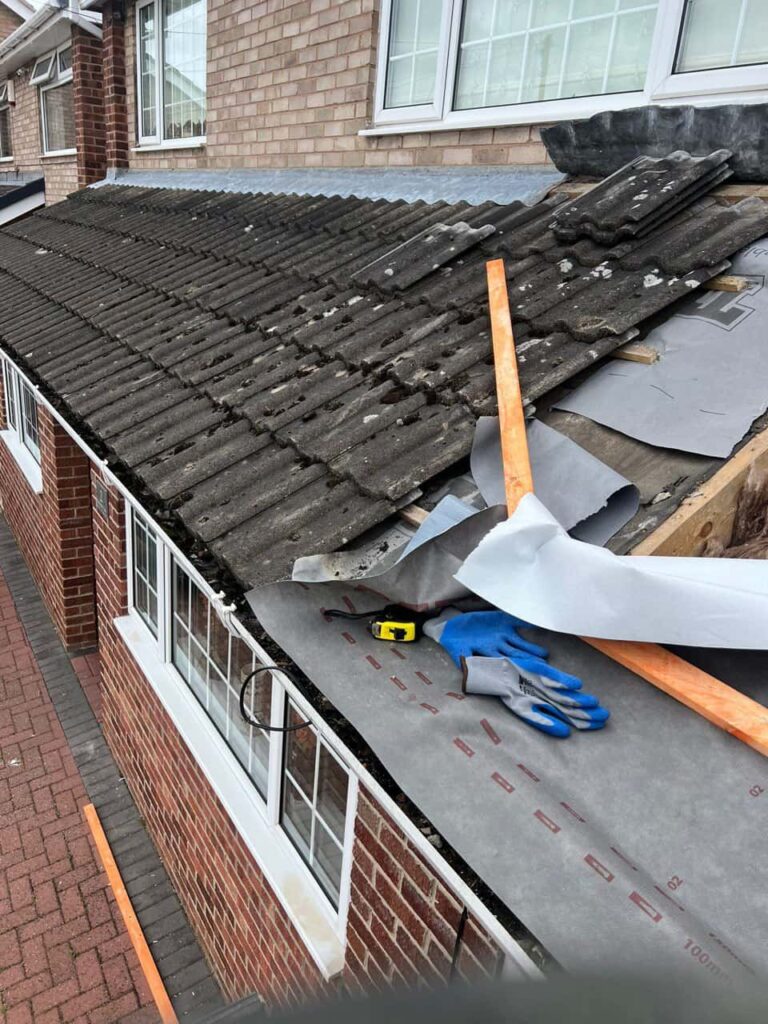
A roof does not need to be visibly leaking before it deserves professional attention. Many roofing problems develop gradually, beginning with a loose tile, weakened flashing or a small drainage defect that may be difficult to identify from ground level.
Recognising when to arrange an inspection can help homeowners in Castle Donnington, Leicestershire, address defects before they affect larger areas of the roofing system. An experienced roofer can assess the visible covering, vulnerable junctions and internal warning signs to determine whether maintenance or repair work is required.
Signs That Your Roof Should Be Professionally Inspected
Some roofing defects are obvious, but others remain concealed until moisture reaches the loft or ceiling. An inspection is worthwhile whenever the roof begins to behave differently, shows visible deterioration or has been exposed to conditions that may have disturbed its components.
You Have Noticed a Damp Patch or Water Mark
A stain on a ceiling or wall can indicate that moisture is entering somewhere above. However, the point where the damp becomes visible may not be directly beneath the defect. Water can travel along underlay, rafters and other roof components before appearing indoors.
A roofer can trace the likely route of the moisture and examine the surrounding area rather than treating only the most obvious external feature.
Roof Tiles Have Moved, Cracked or Gone Missing
Even a slightly displaced tile can expose the layers beneath it to wind-driven rain. Cracked tiles may also absorb or admit moisture, while missing tiles leave a clear weakness in the roof covering.
Damage may be difficult to assess safely from the ground. A professional inspection can establish whether the problem is limited to one tile or whether worn fixings, damaged battens or movement elsewhere has contributed to it.
The Roof Leaks Only During Certain Weather
An intermittent leak is still a roofing problem. Water that appears only during prolonged rain, strong winds or rain from a particular direction often points to a defect at a junction, flashing detail, ridge or tile overlap.
Because these leaks depend on specific conditions, their source can be challenging to identify. A wider inspection helps determine how water is reaching the roof and where it is entering.
Flashing or Mortar Looks Loose
Flashing protects vulnerable areas around chimneys, roof junctions and other transitions. If it cracks, lifts or pulls away, water may pass behind it. Mortar around ridges, hips and verges can also deteriorate, creating gaps or allowing roof components to move.
These areas should be checked promptly because localised deterioration can affect otherwise serviceable sections of the roof.
There Are Signs of Moisture in the Loft
Dark marks on timbers, damp insulation, water droplets or a persistent musty smell can indicate moisture ingress. Daylight visible through the roof covering may also suggest a gap, although not every leak will create an obvious opening.
A loft inspection provides useful evidence, but the external cause still needs to be identified. Treating internal damp without repairing the source allows the problem to continue.
The Roofline Appears Uneven
A roof should maintain a consistent line. Visible dipping, sagging or distortion can indicate movement in the supporting structure, weakened battens or deterioration caused by prolonged moisture exposure.
An uneven appearance does not reveal the full extent of the issue by itself. Professional assessment is needed to establish which components are affected and what action is appropriate.
Gutters Regularly Overflow
Overflowing gutters are often associated with blockages, but they can also indicate poor alignment, inadequate falls or problems where water leaves the roof. Repeated overflow can saturate fascia boards, walls and the roof edge.
A roofer can inspect the complete drainage route and check whether deterioration has developed around the eaves.
A Previous Repair Has Not Solved the Problem
If a leak returns after repair work, the original defect may not have been the only source of water. Moisture could be entering through an adjacent section, or the visible damage may be a symptom of wider deterioration.
A broader inspection can identify related faults and reduce the risk of repeatedly patching individual symptoms.
The Roof Has Been Exposed to Severe Weather
Strong winds and heavy rain can loosen tiles, disturb flashing and expose weaknesses that were already developing. Damage is not always immediately visible, and a roof may continue to appear intact from the ground.
Arranging an inspection after severe weather is sensible if you notice debris, unusual roofline movement, new draughts, dampness or changes to the roof covering.
The Roof Is Showing General Signs of Ageing
Older roofs do not automatically require replacement, but their components may begin to deteriorate at different rates. Brittle tiles, worn underlay, corroded fixings and repeated local defects can reduce overall weather resistance.
An inspection can distinguish between manageable maintenance needs and more widespread decline. This provides a clearer basis for planning suitable work rather than waiting for a significant leak.
What a Professional Roof Inspection Should Cover
A thorough inspection should consider the roof as a complete system. This may include the condition of tiles or slates, ridges, hips, verges, flashing, roof valleys, drainage and accessible internal areas.
The aim is to identify the cause of any problem, assess whether surrounding materials remain sound and recommend work proportionate to the roof’s condition.
Conclusion
It is time to ask a roofer to inspect your roof when you notice damp patches, displaced tiles, recurring leaks, deteriorated flashing, uneven rooflines or other changes in its condition. An inspection can also be valuable after severe weather or when an older roof begins requiring more frequent attention.
Castle Donnington Roofing Repairs provides professional roof inspections and repairs in Castle Donnington, Leicestershire. If you have noticed a possible roofing problem, contact us to arrange an assessment and receive clear guidance on the appropriate next step.
Call us on: 01332 215 195
Click here to find out more about Castle Donnington Roofing Repairs
Click here to complete our contact form and see how we can help with your roofing needs.