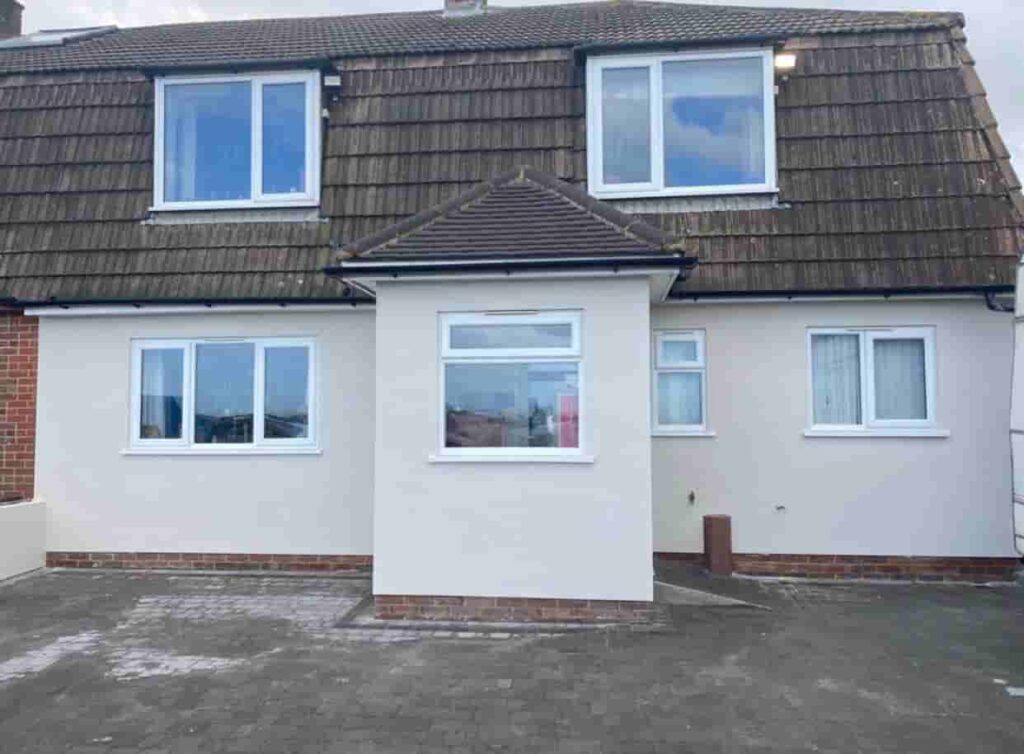
When roofing problems are concentrated in one particular area, homeowners may wonder whether replacing that section alone is sufficient or whether the entire roof needs attention. In many cases, sectional roof replacement can be a practical solution, particularly when the remaining roof is structurally sound and continues to perform reliably.
For homeowners in Castle Donnington, Leicestershire, the decision should be based on the condition of the complete roofing system rather than the appearance of one damaged section. A professional assessment can establish whether deterioration is genuinely localised, why that section has failed and whether the adjoining roof can continue providing dependable protection.
When Can Replacing One Section of a Roof Be Enough?
Replacing part of a roof can be appropriate when deterioration has clear boundaries and the surrounding roofing materials remain serviceable.
The important distinction is between localised failure and widespread deterioration. If one section has been affected by persistent water ingress, damaged materials or another identifiable problem while neighbouring areas remain sound, there may be little benefit in disturbing the rest of the roof unnecessarily.
However, sectional replacement needs careful planning. The renewed area must integrate correctly with the existing roof so that the complete system continues to manage rainfall effectively.
Localised Deterioration Can Make Sectional Replacement Practical
Roofing materials do not always deteriorate uniformly.
One section may experience greater exposure to weather or contain particular details and junctions that make it more vulnerable. Previous work can also mean that different areas of the same roof are at different stages of their serviceable life.
Where inspection confirms that deterioration is limited to one clearly defined section, replacing that area can preserve roofing materials elsewhere that remain in suitable condition.
The objective should always be to match the scope of work to the actual extent of deterioration.
The Cause of the Damage Must Be Identified First
Replacing damaged roofing materials without establishing why they failed can leave the underlying problem unresolved.
For example, repeated water ingress may be connected to a vulnerable junction rather than the main roof covering itself. Likewise, recurring tile movement may indicate an issue that needs to be addressed as part of the sectional replacement.
Before deciding what should be replaced, it is important to establish:
- Where water is entering
- Whether deterioration is confined to one area
- The condition of adjoining roofing materials
- Whether roof junctions are contributing to the problem
- How previous repairs are performing
- Whether movement or deterioration exists beneath the covering
This helps ensure the replacement work addresses the cause rather than simply removing the most visibly damaged materials.
One Leaking Area Does Not Necessarily Mean One Defective Section
Internal water damage can sometimes give a misleading impression of where the roofing problem is located.
Once rainwater gets beneath tiles or slates, it can travel along underlay, timbers and other components before appearing inside the property. A leak visible beneath one section of the roof may therefore originate elsewhere.
This is why sectional replacement should not be planned solely around the position of an internal damp patch.
Tracing the likely entry point first can prevent serviceable roofing materials from being replaced while the actual defect remains untouched.
The Condition of the Adjoining Roof Is Crucial
A sectional replacement needs to connect with existing roofing materials.
If the adjoining roof is stable and serviceable, this can provide a suitable basis for integrating the renewed section. If neighbouring tiles, slates or roof details are already deteriorating significantly, replacing only one area may offer limited long-term benefit.
The boundary between old and new roofing therefore deserves careful consideration.
A professional assessment should look beyond the section proposed for replacement and establish whether the surrounding materials can continue performing reliably.
Different Roof Sections Can Age at Different Rates
A property may contain several roof slopes or sections with different orientations and levels of exposure.
This means one area can deteriorate sooner than another. A section experiencing more demanding weather exposure may require substantial attention while another part remains in good condition.
In these circumstances, replacing the affected section does not automatically mean the remainder should also be replaced.
Roof condition should be assessed section by section while still considering how those sections work together as one complete system.
Sectional Replacement Can Address Repeated Local Repairs
An area that has received several repairs over time may eventually reach a stage where replacing the complete section becomes more appropriate than continuing to address individual defects.
Repeated tile replacement, recurring leaks or deteriorating roof details concentrated within the same area can indicate that localised patch repairs are no longer providing the desired reliability.
Replacing that section can allow the affected area to be approached comprehensively.
Importantly, this does not automatically justify work to other roof areas if they remain sound.
Roof Junctions Need Particular Attention
Where a replacement section meets another roof slope, wall or roofing detail, the junction needs to remain weather-resistant.
These transition points are important because they influence how water moves from one part of the roof to another.
Flashing, valleys and other relevant details may need to be considered as part of the work rather than concentrating exclusively on the main covering.
A well-planned sectional replacement should integrate these components so that the renewed area functions properly with the existing roof.
Replacing One Section Can Resolve Several Connected Defects
Sometimes a single roof section contains several problems rather than one isolated defect.
There may be damaged tiles, deteriorated details and recurring water ingress concentrated within the same area. If these problems share the same underlying cause or are all associated with general deterioration of that section, replacing it can address them together.
This can be more effective than treating each symptom as a separate repair.
The key is confirming that the problems are genuinely concentrated within that area and are not part of deterioration extending throughout the roof.
Previous Repairs Can Help Determine the Right Approach
A roof’s repair history can provide valuable information.
If the same section has repeatedly required attention while the rest of the roof has remained dependable, this pattern may support the case for more comprehensive work to that particular area.
A different situation exists when repairs have been needed across several unrelated sections.
In that case, the roof may be experiencing broader deterioration, and replacing only the area with the latest problem may not provide the most sensible long-term outcome.
When Is Replacing One Section Less Likely to Be Enough?
Sectional replacement becomes less appropriate when problems extend beyond a clearly defined area.
Signs that a broader assessment may be needed include:
- Repeated leaks across different roof sections
- Widespread cracked or displaced roofing materials
- Several deteriorated valleys, ridges or junctions
- New defects appearing regularly
- Significant deterioration immediately beside the proposed replacement
- Previous repairs failing in several unrelated locations
- General unreliability across substantial parts of the roof
These signs do not automatically mean complete replacement is required, but they indicate that the roof should be considered more comprehensively before deciding the scope of work.
Roof Age Should Not Be the Only Deciding Factor
An older roof does not automatically need to be completely replaced because one section has failed.
Age provides useful background information, but present condition is much more important. Some sections may remain perfectly serviceable despite their age, particularly where the materials and associated details continue performing correctly.
Equally, replacing one section purely because the rest of the roof looks acceptable from ground level may not be enough if closer inspection reveals widespread deterioration.
The decision should be based on evidence from the roof itself.
Matching New and Existing Roofing Requires Care
Sectional replacement creates a transition between renewed and existing materials.
Beyond appearance, the important consideration is how effectively these areas work together. The new covering must integrate with existing courses, junctions and water-shedding details.
This requires careful planning rather than simply removing an arbitrary area and installing new materials in its place.
The boundaries of the replacement should make sense from a roofing perspective and allow the completed section to perform as part of the wider system.
A Partial Replacement Should Provide a Genuine Long-Term Improvement
The fact that a roof section can physically be replaced does not automatically mean doing so is the correct solution.
The more useful question is whether replacing that section will restore dependable performance while the remaining roof continues functioning effectively.
If the answer is yes, sectional replacement can avoid disturbing serviceable areas unnecessarily.
If neighbouring sections are also likely to require substantial attention because deterioration is widespread, concentrating solely on one section may simply postpone another roofing problem.
Professional Assessment Helps Establish the Correct Scope
Determining the appropriate boundary for sectional replacement requires an understanding of how the visible damage relates to the wider roofing system.
At Castle Donnington Roofing Repairs, we assess roofing problems in Castle Donnington, Leicestershire by considering the affected section alongside adjoining materials, roof junctions, previous repairs and signs of water ingress.
This helps establish whether one section can be renewed independently or whether deterioration extends further than initially expected.
The aim is to recommend work that reflects the roof’s actual condition rather than automatically assuming either a small repair or complete replacement is necessary.
Conclusion
Yes, replacing one roof section can sometimes be enough to resolve the problem. Where deterioration is clearly localised, the cause can be addressed and adjoining roofing materials remain serviceable, sectional replacement can restore the affected area while preserving sound parts of the existing roof.
However, partial replacement is less likely to provide a lasting solution when leaks, damaged materials or deteriorated roof details are developing across several sections. The condition of the complete roof and the transition between old and new materials must therefore be considered before work begins.
If one section of your roof in Castle Donnington, Leicestershire is repeatedly causing problems, contact Castle Donnington Roofing Repairs. We can assess the affected area and surrounding roof to determine whether sectional replacement is appropriate and recommend work based on what the roof genuinely requires.
Call us on: 01332 215 195
Click here to find out more about Castle Donnington Roofing Repairs
Click here to complete our contact form and see how we can help with your roofing needs.